
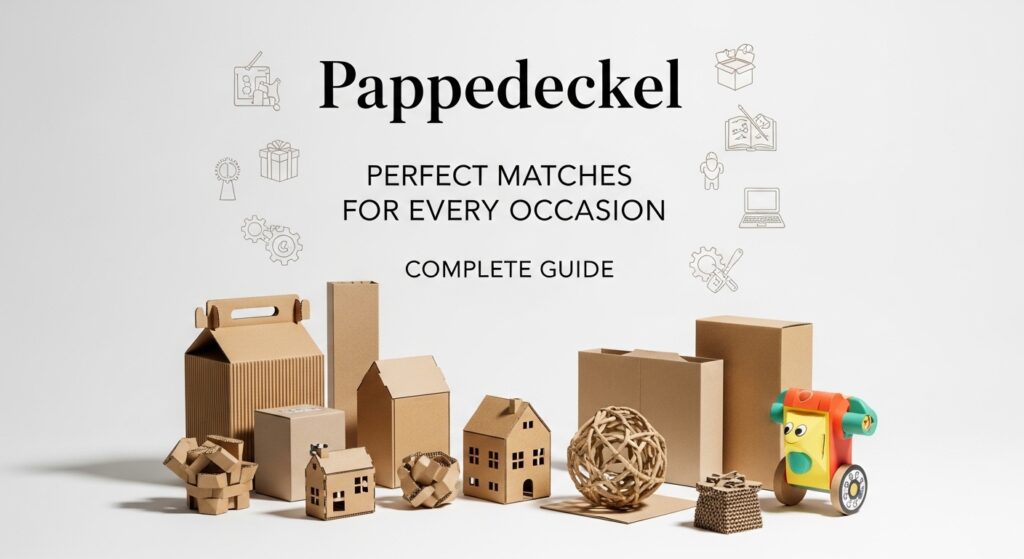
In the modern world, practical materials often play a bigger role in daily life than people realize. One such versatile material is pappedeckel, which has gained attention for its adaptability, sustainability, and wide range of uses across industries and creative activities. From packaging and crafts to organization and decorative solutions, this material represents a simple yet effective option that can match many different needs. The concept of using pappedeckel for perfect matches in various situations demonstrates how a basic material can become an essential element in both practical and creative environments. By combining durability with flexibility, pappedeckel offers solutions that suit professional, educational, and personal settings.
The increasing focus on environmentally friendly materials has also contributed to the popularity of pappedeckel. As individuals and organizations seek sustainable alternatives to plastic and other non-biodegradable products, cardboard-based materials have become an important part of responsible production and design. The ability to customize and adapt pappedeckel allows people to create products that are functional while maintaining environmental awareness.
Understanding the Role of pappedeckel in Everyday Applications
The term pappedeckel refers to sturdy cardboard material that is widely used for protective covers, packaging structures, creative crafts, and organizational tools. Its structure provides strength while remaining lightweight, making it suitable for many different purposes. Because of its durability and affordability, this material has become a preferred choice for businesses and individuals alike.
In everyday life, pappedeckel can be found in packaging boxes, book covers, product displays, storage containers, and handmade projects. Its ability to be cut, folded, printed, and shaped makes it highly versatile. The adaptability of this material allows it to match specific requirements in various contexts.
The table below demonstrates several common uses of pappedeckel across different environments.
| Application Area | Primary Purpose | Example Use | Outcome |
|---|---|---|---|
| Packaging Industry | Product protection | Shipping boxes and inserts | Safe transportation |
| Education | Creative learning | School craft projects | Skill development |
| Retail | Display solutions | Product presentation stands | Attractive display |
| Home Organization | Storage solutions | File folders and dividers | Better organization |
These examples highlight how a simple material can provide solutions in both professional and personal settings.
pappedeckel in Sustainable Packaging Solutions
Sustainability has become one of the most important considerations in modern production. The use of pappedeckel in packaging has expanded significantly due to its environmentally friendly properties. Cardboard-based materials are biodegradable, recyclable, and often produced from renewable resources.
Companies are increasingly choosing pappedeckel packaging because it balances durability with ecological responsibility. When compared with plastic packaging, cardboard alternatives reduce environmental impact and improve waste management processes. Consumers also appreciate packaging that reflects sustainable values. Many packaging systems rely on layered cardboard designs that provide protection without adding unnecessary weight. This design approach improves efficiency in transportation and storage while maintaining product safety.
The following table compares different packaging materials in terms of sustainability and practicality.
| Material Type | Environmental Impact | Durability | Recycling Potential |
|---|---|---|---|
| Plastic Packaging | High environmental impact | Moderate | Limited |
| Metal Containers | High durability | Very strong | Recyclable but energy intensive |
| pappedeckel Packaging | Lower environmental impact | Strong and lightweight | Highly recyclable |
This comparison illustrates why cardboard-based packaging continues to grow in popularity.
Creative Design Possibilities with pappedeckel
One of the most fascinating aspects of pappedeckel is its potential for creative design. Artists, designers, and hobbyists frequently use this material to create unique projects that combine functionality with artistic expression. Because it can easily be shaped and decorated, pappedeckel provides a flexible base for many creative activities. Creative design projects often involve cutting patterns, folding structures, or adding printed graphics to enhance visual appeal. These techniques transform simple cardboard into decorative objects, architectural models, and innovative displays.
Designers also experiment with texture, layering, and color application to produce visually striking results. The ability to combine structural stability with aesthetic possibilities makes pappedeckel a valuable material in design studios and workshops. The table below illustrates several creative uses for pappedeckel in artistic projects.
| Creative Project | Design Approach | Result |
|---|---|---|
| Architectural models | Precise cutting and layering | Realistic structural models |
| Handmade decorations | Painted or printed surfaces | Decorative home items |
| Product displays | Foldable structures | Professional retail presentation |
| Educational crafts | Interactive designs | Engaging learning tools |
These creative applications show how the material supports both functionality and imagination.
The Practical Benefits of Using pappedeckel
In addition to sustainability and creativity, pappedeckel offers several practical advantages that contribute to its widespread use. One of the most notable benefits is its affordability. Compared with many other materials, cardboard is cost-effective while still providing adequate strength.
Another important benefit is ease of customization. Businesses can print branding, instructions, or decorative patterns directly onto the surface of the material. This feature allows companies to create packaging that communicates information and reinforces brand identity at the same time. Lightweight construction also makes pappedeckel convenient for transportation and storage. Products packaged in cardboard materials are easier to handle and ship, which reduces logistical challenges for businesses.
The table below outlines key advantages associated with using this material.
| Advantage | Description | Impact |
|---|---|---|
| Cost efficiency | Affordable production and sourcing | Reduced business expenses |
| Lightweight structure | Easy transportation and handling | Lower shipping costs |
| Customizable surface | Supports printing and branding | Enhanced product presentation |
| Recyclability | Environmentally responsible disposal | Sustainable production cycle |
These benefits demonstrate why pappedeckel remains a valuable resource in multiple industries.
pappedeckel in Educational and Learning Environments
Educational institutions frequently incorporate pappedeckel into learning activities because it supports creativity and hands-on exploration. Students can easily manipulate cardboard materials to build models, diagrams, and prototypes that help them understand complex concepts.
Hands-on learning encourages students to engage with subjects in a more interactive way. By constructing physical representations of ideas, learners develop problem-solving skills and spatial awareness. The simplicity of cardboard makes it an ideal material for classroom projects because it is safe, accessible, and inexpensive. Teachers often use pappedeckel to create educational tools such as flashcard holders, visual charts, and interactive displays. These materials help students visualize information and retain knowledge more effectively.
The following table highlights how cardboard materials support learning processes.
| Educational Activity | Purpose | Learning Outcome |
|---|---|---|
| Model construction | Visualizing scientific concepts | Improved understanding |
| Craft projects | Developing creativity | Enhanced imagination |
| Display boards | Presenting research projects | Effective communication |
| Organizational tools | Managing study materials | Better academic organization |
Through these applications, students gain practical experience while developing essential skills.
Industrial and Commercial Uses of pappedeckel
In industrial settings, pappedeckel serves as an important component of packaging systems, protective materials, and product presentation. Manufacturers rely on cardboard materials to ensure that goods remain safe during transportation and storage. Retail businesses also use cardboard-based materials to create display stands that highlight products in stores. These displays are easy to assemble, cost-effective, and visually appealing when designed with printed graphics.
The adaptability of pappedeckel allows companies to create customized packaging solutions tailored to specific products. By adjusting thickness, layering, and structural design, manufacturers can produce packaging that meets unique requirements. The table below summarizes several commercial uses of this material.
| Industry Sector | Application | Benefit |
|---|---|---|
| Manufacturing | Protective packaging | Product safety |
| Retail | Display stands | Attractive presentation |
| Logistics | Shipping containers | Efficient transport |
| Marketing | Promotional packaging | Brand visibility |
These applications demonstrate how cardboard materials support both operational efficiency and marketing strategies.
Future Innovations Involving pappedeckel
As technology continues to evolve, new innovations are emerging that enhance the functionality of pappedeckel. Designers and engineers are experimenting with advanced printing techniques, layered structural designs, and environmentally friendly coatings that improve durability without compromising sustainability.
Research into biodegradable materials has also expanded the potential uses of cardboard-based products. By integrating natural fibers and eco-friendly treatments, manufacturers are developing stronger and more resilient forms of cardboard that maintain environmental responsibility. Future developments may include smart packaging systems that incorporate digital tracking or interactive elements printed onto cardboard surfaces. These innovations could transform packaging into a more informative and engaging medium. The following table outlines potential future developments related to cardboard materials.
| Innovation Area | Description | Potential Impact |
|---|---|---|
| Advanced printing technology | High-quality graphics and branding | Enhanced product appeal |
| Eco-friendly coatings | Improved durability | Extended material lifespan |
| Smart packaging integration | Digital tracking features | Improved logistics management |
| Structural engineering | Stronger layered designs | Increased packaging protection |
These developments highlight the evolving role of cardboard materials in modern industries.
The Long-Term Value of pappedeckel in Modern Society
The continued relevance of pappedeckel demonstrates how simple materials can remain valuable even as technology advances. Its ability to combine practicality, sustainability, and creative potential makes it a reliable solution for many everyday challenges. Businesses benefit from cost-effective packaging and presentation systems, while educators and artists appreciate the material’s versatility. Consumers also recognize the environmental advantages of choosing products packaged in recyclable materials.
As awareness of sustainability grows, materials that support responsible production will continue to gain importance. Cardboard-based solutions offer a balance between functionality and ecological awareness that aligns with modern values. Ultimately, the concept of perfect matches for every occasion reflects the adaptability of this material. Whether used for packaging, creativity, learning, or organization, pappedeckel provides solutions that fit a wide range of needs while maintaining simplicity and efficiency.